

Travel & Organization · buying guide
Travel Essentials List
A failure-point inventory, a no-buy packing test, and attributable products to compare only when a gap remains. The comparison is bounded to weight, retrieval, redundancy, and constraints.
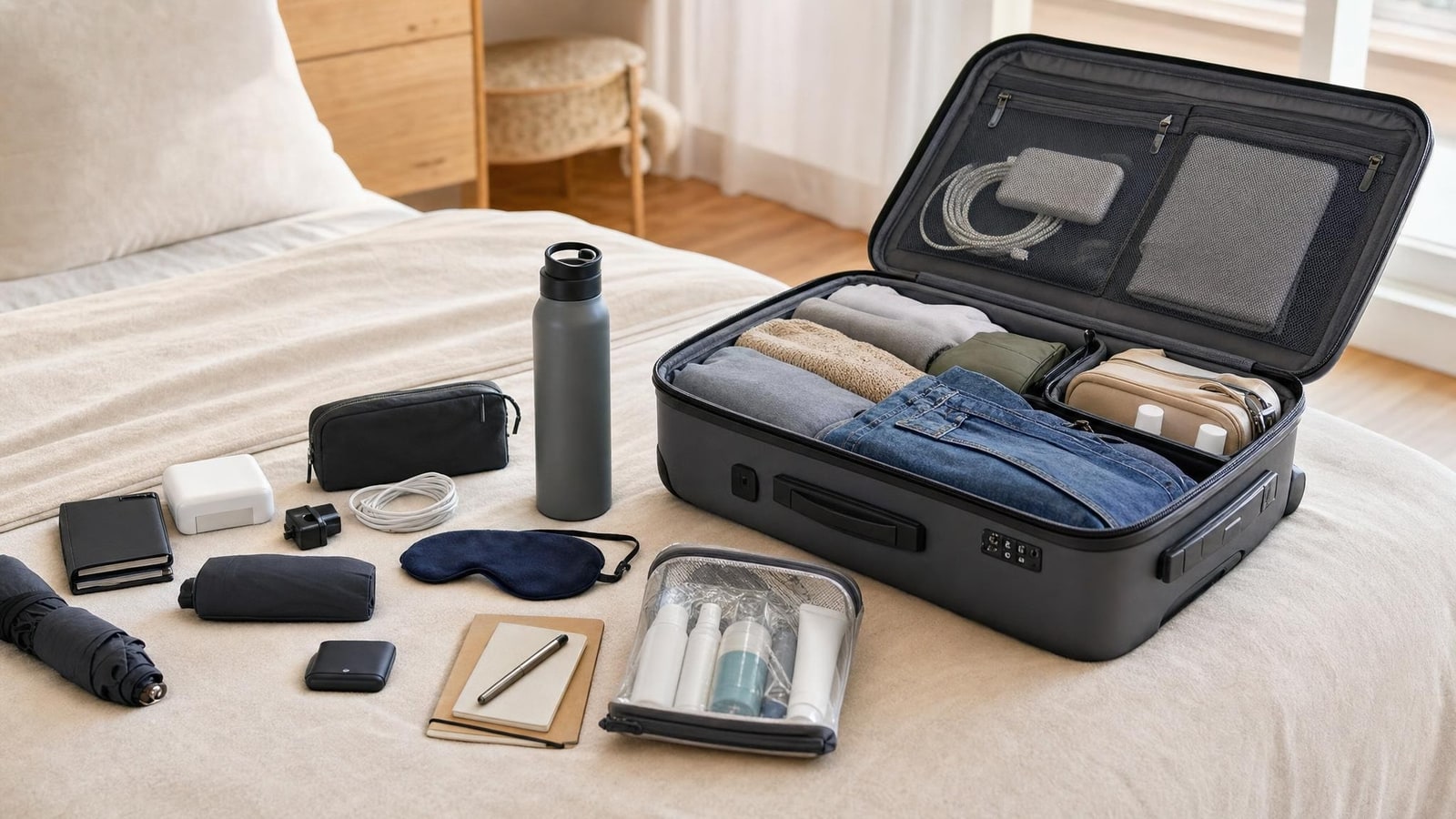
Choose a travel accessory only for a specific failure point: heat and backup power, uncertainty about a checked bag, or difficult packing and retrieval. First check the weather, keep medication and documents in your personal item, label luggage, and use a packing list. Then compare the fan, tracker, or cubes only if that no-buy routine leaves a clear gap.
Quick product guide
Products featured in this guide
JISULIFE portable fan with power bank and flashlight
Best for: Travel where heat, emergency light, and backup power needs overlap.
Limitation: Battery transport rules, charging capacity, and fan runtime must fit the itinerary.
View on AmazonApple AirTag second generation
Best for: Travelers already using the compatible device ecosystem and a responsible recovery plan.
Limitation: It cannot prevent loss, guarantee recovery, or replace airline baggage procedures.
View on AmazonBago seven-piece packing cube set
Best for: Trips where several clothing and small-item zones reduce repeated unpacking.
Limitation: The pieces add weight, storage, and zipper management without creating more suitcase capacity.
View on AmazonCompare the fit, not a generic ranking
| Option | Best for | Strongest benefit | Main limitation |
|---|---|---|---|
| JISULIFE portable fan with power bank and flashlight | Travel where heat, emergency light, and backup power needs overlap. | One compact device can cover three carefully verified contingency roles. | Battery transport rules, charging capacity, and fan runtime must fit the itinerary. |
| Apple AirTag second generation | Travelers already using the compatible device ecosystem and a responsible recovery plan. | A tracker can add location signal to a documented lost-bag response process. | It cannot prevent loss, guarantee recovery, or replace airline baggage procedures. |
| Bago seven-piece packing cube set | Trips where several clothing and small-item zones reduce repeated unpacking. | The mixed-size set supports a deliberate retrieval map. | The pieces add weight, storage, and zipper management without creating more suitcase capacity. |
On a narrow screen, swipe the table sideways to compare every column.
Buying criteria
Build a fit plan before opening a listing
Define the problem before choosing a category
Name the travel failure you are trying to reduce. Choose cooling or backup power only if heat and power access are credible concerns; choose tracking only if luggage uncertainty is the issue; choose organization only if packing and retrieval are the problem. If the problem is overpacking, tight connections, missing documents, or a lack of essential items in your personal bag, planning changes may help more than any of these formats.
Use a no-purchase trial first
Before adding gear, test the workflow with what you own. Pack clothing into reusable bags or pouches to test categories; label a bag and record its contents to test your baggage process; carry water, a charging cable, and a simple light source on a local outing to identify actual heat or power gaps. The results reveal whether the product category solves a real recurring problem.
Check bag dimensions and packing order
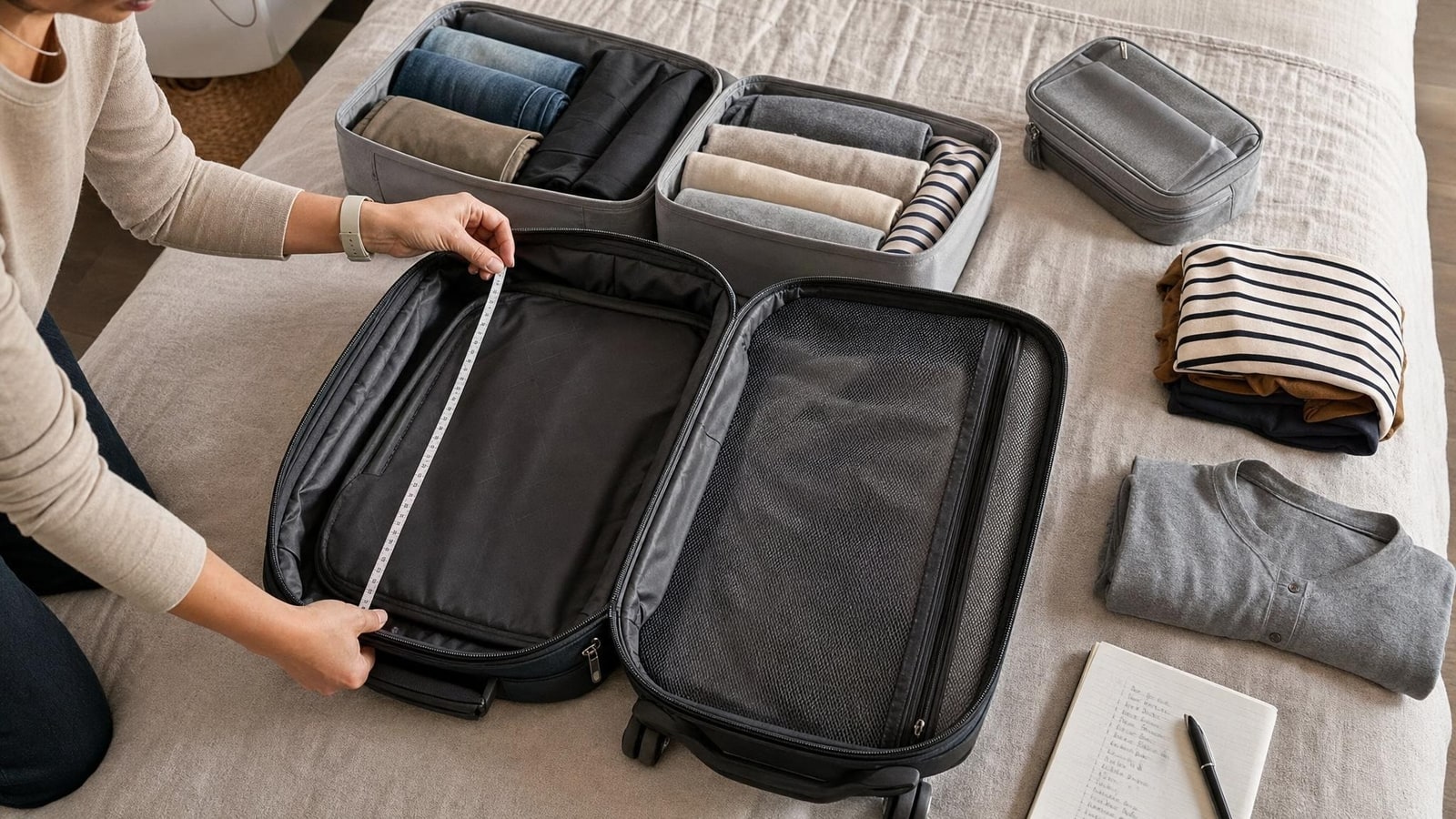
For packing organizers, measure the usable interior of the specific suitcase or backpack rather than relying on its stated external size. Decide what must remain accessible during transit, what can be checked, and where dirty or wet items will go. Organizers work best when each container has a stable purpose and can be removed without dismantling the whole bag.
Treat battery items as travel-regulated equipment
For any device with a battery or power-bank function, confirm current airline, airport, and destination rules directly before travel. Consider where the item must be packed, how you will keep it charged, and what happens if its battery is depleted. A fan or flashlight function should be viewed as supplemental, not as a safety plan for hazardous heat or an extended power interruption.
Confirm compatibility and privacy for trackers
A luggage tracker should be considered only after confirming compatibility with the traveler’s devices and understanding its location-sharing, notification, and privacy behavior. Plan how it will be used when a bag is delayed: retain baggage documentation, communicate with the carrier through its established process, and avoid treating the tracker as proof that staff can immediately retrieve a bag.
Plan for failure rather than assuming a tool will prevent it
Each category has limits. A battery can run out, tracking information can be incomplete, and cubes can make a poorly chosen packing list look tidier without making it smaller. Keep identification and essential items with you, use a packing list, leave room for repacking, and have a low-tech backup such as written contact information and a way to separate critical belongings.
Recommendations in detail
Match each option to a measured problem
Recommendation 1
JISULIFE portable fan with power bank and flashlight
A multi-use backup format to compare against climate, battery, and airline constraints.
- Best for
- Travel where heat, emergency light, and backup power needs overlap.
- Strongest benefit
- One compact device can cover three carefully verified contingency roles.
- Main limitation
- Battery transport rules, charging capacity, and fan runtime must fit the itinerary.
Pros, cons, evidence, and when to skip
Skip if
- None of the three functions solves a documented trip risk.
How we checked it
Identity, destination, and authorized product media were checked against the current controlled commerce record. See our methodology for how those checks support this recommendation. Read the editorial methodology.
Recommendation 2
Apple AirTag second generation
A tracker format to compare after compatibility, privacy, and luggage workflow are understood.
- Best for
- Travelers already using the compatible device ecosystem and a responsible recovery plan.
- Strongest benefit
- A tracker can add location signal to a documented lost-bag response process.
- Main limitation
- It cannot prevent loss, guarantee recovery, or replace airline baggage procedures.
Pros, cons, evidence, and when to skip
Skip if
- Your phone ecosystem is incompatible or the tracker would be used without consent.
How we checked it
Identity, destination, and authorized product media were checked against the current controlled commerce record. See our methodology for how those checks support this recommendation. Read the editorial methodology.
Recommendation 3
Bago seven-piece packing cube set
A packing-organization format to compare against bag dimensions and retrieval needs.
- Best for
- Trips where several clothing and small-item zones reduce repeated unpacking.
- Strongest benefit
- The mixed-size set supports a deliberate retrieval map.
- Main limitation
- The pieces add weight, storage, and zipper management without creating more suitcase capacity.
Pros, cons, evidence, and when to skip
Skip if
- Your existing bag compartments already provide a clear retrieval plan.
How we checked it
Identity, destination, and authorized product media were checked against the current controlled commerce record. See our methodology for how those checks support this recommendation. Read the editorial methodology.
Alternatives and no-buy options
When none of these products is appropriate
- For hot-weather comfort, prioritize hydration, appropriate clothing, shade, rest breaks, and itinerary changes; use a non-battery hand fan or a destination-purchased fan if battery constraints are not worth managing.
- For power concerns, reduce phone use, download needed information in advance, carry the correct charging cable, and identify charging opportunities. If backup power is essential, compare dedicated power solutions only after checking current travel rules and your actual device needs.
- For luggage uncertainty, use durable bag identification, keep a photo and description of the bag, retain baggage records, place essentials in a personal item, and follow the carrier’s baggage-reporting procedure if a bag is delayed.
- For packing organization, use existing pouches, reusable bags, folded bundles, or a simple outfit-by-outfit packing list. Reducing duplicate clothing and choosing versatile items often saves more space than adding organizers.
- For a minimal travel setup, avoid adding any accessory until a previous trip or a realistic packing rehearsal demonstrates a specific recurring problem.
Final recommendation
Choose the format that matches the recurring travel problem
There is no universal winner among these three formats. Select the Bago packing cube set when the clear, repeatable issue is finding and repacking items inside a bag and you have verified that the organizers fit your luggage. Consider the Apple AirTag second generation only when compatible devices, privacy expectations, and a responsible checked-luggage process are already in place. Consider the JISULIFE portable fan with power bank and flashlight only when warm conditions and backup-function needs justify managing a battery-powered multi-use item under applicable travel rules. If you cannot identify a recurring problem or confirm the relevant constraints, use the no-purchase alternatives first.
View on Amazon